Plant-forward sports nutrition: Meeting protein needs as a vegetarian runner
More runners are choosing to eat a vegetarian or predominantly plant-based diet for health, environmental or ethical reasons. The good news is that a well-planned vegetarian diet can absolutely support running performance, recovery and muscle adaptation, according to the Academy of Nutrition and Dietetics and International Society of Sports Nutrition.
The key is understanding which nutrients deserve extra attention. While vegetarian diets are naturally rich in carbohydrate, antioxidants and fibre which are all beneficial for endurance performance, they can make it more challenging to meet requirements for certain nutrients (Sports Dietitian Australia).
For runners, the nutrients that deserve the greatest focus include:
Protein
Iron
Vitamin B12
Calcium
Vitamin D
Zinc
Iodine
Omega-3 fats (EPA and DHA)
This blog focuses on the nutrient I discuss most often with runners in the clinic: protein.
Protein: More than just muscle building
Protein isn't only important for strength athletes. Endurance runners rely on protein to repair muscle damage, support training adaptations, maintain lean muscle mass and assist immune function (Academy of Nutrition and Dietetics).
Vegetarian runners can absolutely meet their protein requirements, but it often requires more planning and a greater amount of plant-based protein to reach protein requirements.
How much protein do runners need?
Current sports nutrition guidelines recommend:
Recreational endurance athletes: 1.2–1.4 g/kg/day
Competitive endurance athletes: 1.4–1.6 g/kg/day
During heavy training, energy restriction or injury: up to 1.8–2.0 g/kg/day
Rather than consuming most of your protein at dinner, aim to spread intake evenly across the day.
A practical target is:
20-30 g of protein every 3-4 hours
This stimulates muscle protein synthesis more effectively than consuming the majority of protein in one meal. For individualised protein requirements, a dietitian will be able to determine this for you.
Plant proteins vs animal proteins
Not all proteins are the same.
Animal proteins are considered "complete proteins", meaning they contain all nine essential amino acids in sufficient amounts.
Plant proteins can provide all the essential amino acids needed to support training and recovery. However, some plant proteins contain lower amounts of certain essential amino acids and may be less digestible than some animal proteins. Vegetarian athletes can therefore benefit from eating a variety of protein-rich plant foods throughout the day and paying attention to total protein intake.
Excellent plant protein sources include:
Soy foods (tofu, tempeh, soy milk, edamame)
Lentils
Chickpeas
Kidney beans
Black beans
Peas
Quinoa
Hemp seeds
Pumpkin seeds
Nuts
High-protein dairy (if lacto-vegetarian)
Eggs (if ovo-vegetarian)
Soy protein is unique because its amino acid profile is very similar to animal protein.
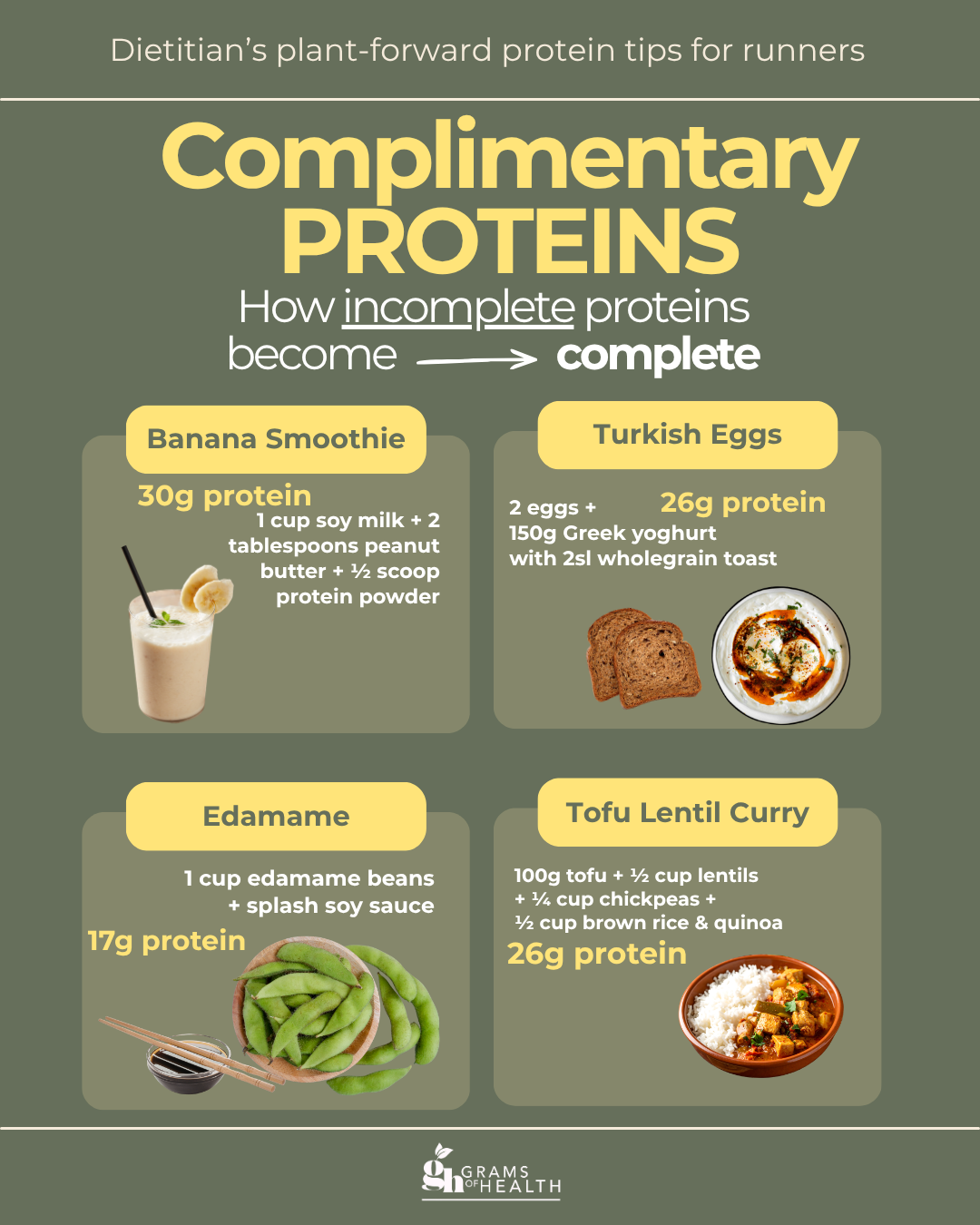
What makes a protein complementary?
Complementary proteins are different plant-based protein sources that have different amino acid profiles. Consuming a variety of plant proteins across the day helps ensure adequate intake of all the essential amino acids needed for training, recovery and adaptation. When they’re paired together, they fit like puzzle pieces, filling in any amino acid gaps that are missing to make up complete proteins across the day.
Eating a wide variety of plant proteins across the day provides all the essential amino acids needed to support recovery and performance.
That said, combining complementary proteins together in a meal such as:
legumes + grains
tofu + rice
hummus + wholegrain bread
peanut butter + oats
This can help improve overall protein quality and allow you to receive all those essential amino acids to give you the most benefit from your protein intake.
Dont forget leucine
Wait, so who is Leucine?
Leucine is the amino acid that "switches on" muscle protein synthesis after exercise. Protein doses containing approximately 700–3000 mg of leucine are recommended as part of a balanced intake of essential amino acids.
Plant proteins generally contain slightly less leucine than animal proteins, meaning vegetarian athletes may benefit from:
slightly larger serves of protein
choosing soy-based foods more regularly
including dairy or eggs if consumed
using a quality plant protein supplement if intake is difficult to achieve
Recovery nutrition matters
The post-run recovery window (30-120minutes after) is the best opportunity to support muscle repair (Sports Dietitians Australia, 2016). By consistently filling in this gap with the right fuel, the stronger you’ll be and the less likely you’ll be to get injured.
Aim for:
20–30 g protein
carbohydrate to replenish glycogen stores
fluids and electrolytes
Consuming carbohydrate after exercise supports the restoration of muscle glycogen, particularly when training sessions are frequent or when rapid recovery is required.
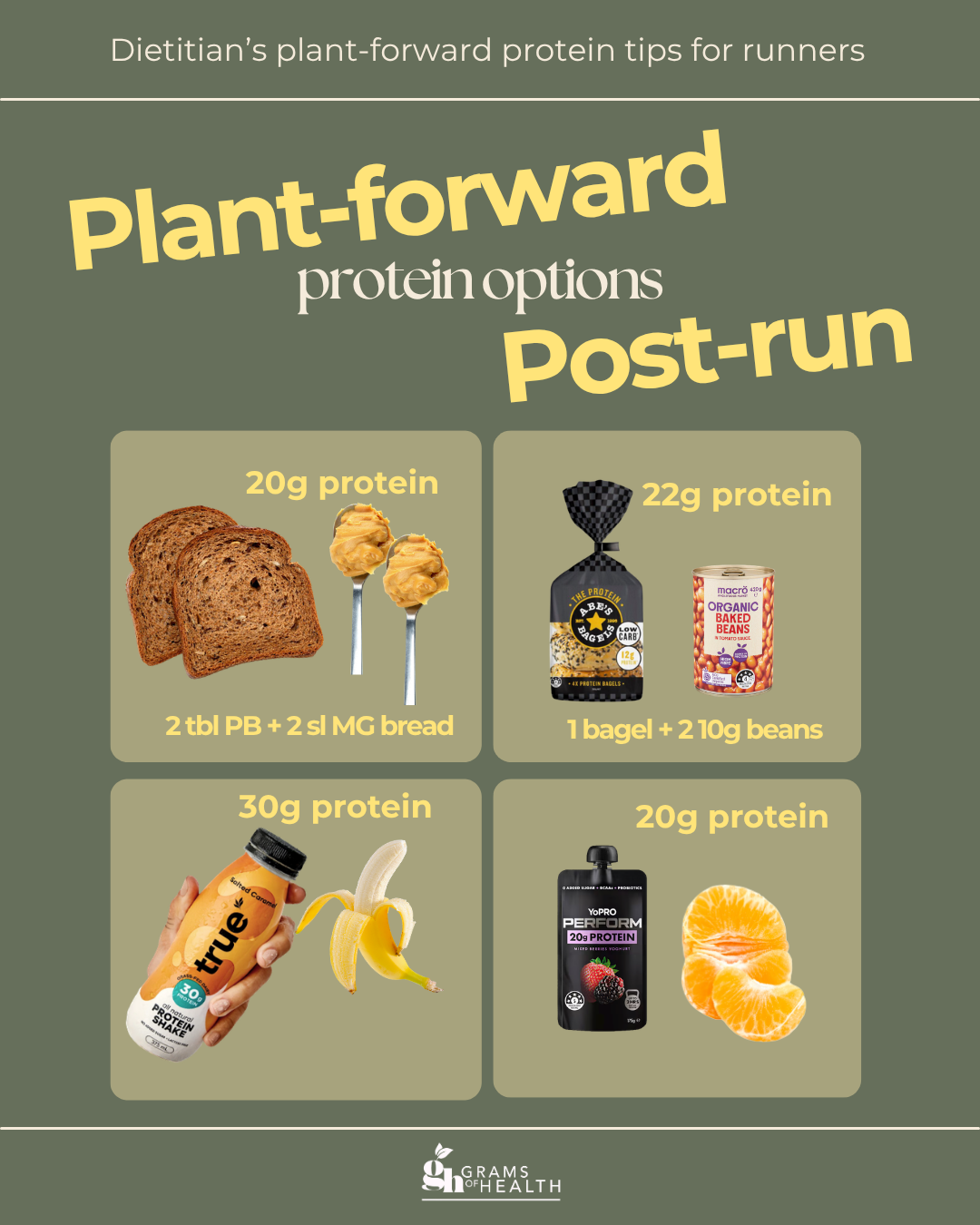
Examples include:
Rokeby Farms protein drink + fruit of fruit
YoPro yoghurt with fruit and granola
Smoothie with soy milk, banana and protein powder
Tofu stir-fry with rice
Bean burrito with salsa and avocado
The bottom line
A vegetarian or plant-forward diet can successfully fuel running performance, but it requires thoughtful planning and education around the key nutrients this diet may be naturally lacking in. Prioritising high-quality protein throughout the day can help support adequate protein intake and optimise training recovery and adaptation.
With the right nutrition strategy, vegetarian runners can recover well, adapt to training and perform at their best.
If you need individualised nutrition or supplementation advice, the Grams of Health Dietitians are a perfect place to start. Book in for a nutrition consultation to get the full picture and find the best pathway for you.
FAQ’s
Can vegetarian runners get enough protein?
Yes. Vegetarian runners can meet their protein requirements through a well-planned diet. The key is including a variety of protein-rich foods throughout the day, such as tofu, tempeh, legumes, soy milk, dairy, eggs, nuts, seeds and quinoa. Because some plant proteins are less digestible and may contain lower amounts of certain essential amino acids, vegetarian runners may benefit from slightly larger protein serves and spreading protein intake across the day.
What is the best plant based protein for runners?
There isn't one single "best" option. Soy foods such as tofu, tempeh, edamame and soy milk are particularly useful because soy is a high-quality plant protein with a strong essential amino acid profile. Legumes, dairy, eggs, quinoa, nuts and seeds can also contribute significantly to overall protein intake.
Do I need to combine proteins at every meal?
No. You don't need to carefully combine complementary proteins at every meal. Eating a varied diet containing different plant protein sources throughout the day can provide all the essential amino acids you need. For example, you might have oats and peanut butter at breakfast, a lentil salad at lunch and tofu with rice at dinner.
Should I worry about iron as a vegetarian runner?
Yes - iron is one of the most important nutrients for vegetarian runners to monitor, due to the already-higher risk of iron depletion from foot strike haemolysis. This is where the repeated impact of running causes breakdown of red blood cells. Plant-based iron (known as non-haem iron) is also less readily absorbed by the body than the iron found in meat and fish. It is strongly recommended that vegetarian runners have their iron levels checked regularly by their GP, particularly during periods of high training load.
Do I need a protein supplement as a vegetarian runner?
Not necessarily. Many vegetarian runners can meet their protein requirements through whole foods alone, provided they are eating a varied diet with regular protein-rich meals and snacks throughout the day. However, a quality plant-based protein supplement can be a convenient and practical option in certain situations - for example, if your training load is high, your appetite is suppressed after long runs, or you are struggling to hit your protein targets through food alone.
References:
Burke LM, Hawley JA, Wong SHS, Jeukendrup AE. Carbohydrates for training and competition. Journal of Sports Sciences. 2011.
Cox G. The Vegetarian Athlete. Sports Dietitians Australia. 2015
International Olympic Committee Consensus Statement on Dietary Supplements and the High-Performance Athlete. 2018.
International Olympic Committee Consensus Statement on Relative Energy Deficiency in Sport (REDs): 2023 Update.
Morton RW, et al. Protein intake to maximize resistance-training adaptations: a systematic review and meta-analysis. British Journal of Sports Medicine. 2018. (Useful for protein distribution and total intake.)
Jäger R, et al. International Society of Sports Nutrition Position Stand: Protein and Exercise. Journal of the International Society of Sports Nutrition. 2017.
Sports Dietitians Australia. Food for Your Sport - Distance Running. Sports Dietitians Australia; 2016.
Thomas DT, Erdman KA, Burke LM. Position of the Academy of Nutrition and Dietetics, Dietitians of Canada and the American College of Sports Medicine: Nutrition and Athletic Performance. J Acad Nutr Diet. 2016.