
What to Eat Before, During and After a Marathon (Dietitian Guide)

The under fuelling epidemic is becoming increasingly common, with many runners not eating enough to support their training. Knowing what to eat before, during and after a marathon can significantly improve performance, recovery and injury prevention. The key principles are simple: prioritise carbohydrates for fuel, electrolytes and fluids for hydration, and protein for recovery.
As an Accredited Practising Dietitian and marathon runner, I’ll outline how to fuel your long runs and race day.
The 3 Key Nutrients for Endurance Performance
Carbohydrates, your primary fuel source
Electrolytes and hydration, for fluid balance and performance
Protein, for recovery and muscle adaptation
Nutrition needs vary based on body size, training load and sweat rate - use this as a general framework.
Grace’s Tip: “Don’t wait until race day to practise your fuelling strategy. Your long runs are the perfect opportunity to train your gut and find what works for you in preparation for race day.”
Why Many Marathon Runners Under Fuel
When training volume, particularly on long run days increases, and runners aren't fuelling enough, low energy availability can occur. This is where the body does not have enough fuel left over after training to support normal physiological function.
Over time, this can impair:
Bone health
Recovery
Immune function
Hormonal balance
Your fuelling strategy should progressively build in conjunction with your training plan; consistency is key.
How Many Carbohydrates Do Runners Actually Need?
Carbohydrates are your primary fuel, stored as glycogen in muscles and liver. Increasing carbohydrate intake before heavy training helps maintain glycogen stores. This will ensure there is sufficient fuel available in these stores to meet training demands and support ongoing performance.
Base intake on whole grains, fruit and dairy, using lower-fibre options around training. Sports Dietitians Australia
For moderate to high marathon training loads:
Aim for 6 to 10g of carbohydrate per kilogram of body weight per day Australian Institute of Sport.
You may need the higher end when:
Training peaks
Completing long runs over 90 minutes
In the 24 to 48 hours before race day
During taper week leading up to race day
If intake consistently falls below needs, glycogen stores remain chronically low, recovery slows and injury risk increases.
This is where many runners unknowingly under-fuel.
What to Eat the Night Before a Long Run or Marathon
The night before is about eating adequately - not excessively.
Your goal is to maximise glycogen stores while keeping digestion comfortable and your gut happy.
Focus on:
High carbohydrate
Moderate protein
Lower fibre
Lower fat
Lower fibre and fat to reduce GI discomfort (and reduce unwanted trips to the bathroom during your longer runs).
Simple Dinner Idea:
Jasmine rice or rice noodles, simple carbohydrate
Chicken breast or beef mince, lean protein source
Soy sauce, adds flavour and sodium inclusion
The night before your long runs are the ‘rehearsal dinners’ for the night before the marathon. So keep it simple, familiar and try not to bring in anything new during your taper week.
What to Eat Before a Morning Long Run
After an overnight fast, liver glycogen is reduced. Starting long runs without topping this up increases perceived effort early on. Start with a simple carbohydrate breakfast.
60 to 90 Minutes Before Running:

Crumpet with honey or jam
White toast with jam
LCM bars
Optional Top Up 15 Minutes Before:
One energy gel with water
A sports drink
Carbohydrate-electrolyte mix
Two dates Sports Dietitians Australia
Small top-ups often make the first 5km feel easier.
How Many Carbs Per Hour During a Marathon?
For runs over 90 minutes, fuelling becomes essential.
A practical starting target is:
Around 60g of carbohydrate per hour or approximately 30g every 30 minutes. Australian Institute of Sport
Some well-trained runners may tolerate up to 90-120g per hour using fructose and glucose carbohydrate blends.
Train your gut, just like you train your legs!
Intra Run Nutrition Options:
Commercial gels (e.g. Precision Performance, PURE, Maple Movement)
Salted maple syrup in a soft flask
Dates with a pinch of salt
These options combine glucose and fructose, improving absorption as they are absorbed through different pathways. Emerging research suggests that combining these two carbohydrates may help you absorb more than 60g per hour.
How Much Should You Drink During a Marathon?
Hydration affects both performance and overall stress on the body. Drinking enough fluids helps maintain blood volume, which supports oxygen delivery to your muscles while you run.
Long runs are a great opportunity to practise your hydration and nutrition strategy for race day.
Night before up to 2 hours before long runs, it is recommended to consume:
10ml per kilogram of bodyweight on top of regular drinking habits
During long runs, a general guide is:
500ml of fluid per hour or 250ml every 15-30minutes
400 to 800mg of sodium per hour
Sydney’s warm and humid conditions can increase sweat losses, meaning needs may sit at the higher end. Higher sweat losses require greater fluid replacement.
Chronic under-fuelling and dehydration increase physical stress, which can negatively affect recovery and bone health over time.
What Should You Eat After a Marathon or Long Run?
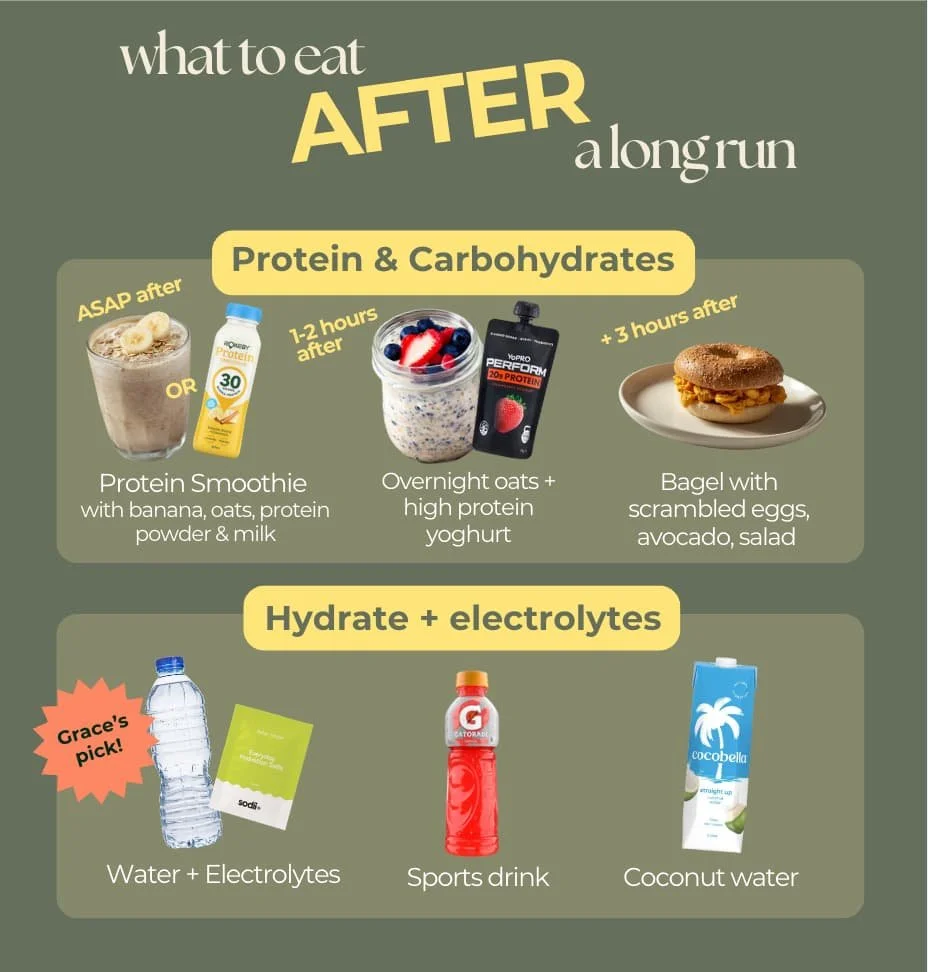
Recovery is where adaptation happens.
Aim to eat within the optimal recovery window of 30 to 60 minutes after finishing your run.
Include:
15- 20g of protein at least Sports Dietitians Australia
A quality carbohydrate source (work towards 1g of carbohydrates per kilogram of body weight)
Hydrate well to replace fluids lost! This means water & electrolytes (i.e. sports drinks, coconut water)
Examples:
Smoothie with banana, oats, yoghurt and milk
Overnight oats with high-protein yoghurt
Bagel with scrambled eggs
Skipping recovery nutrition increases injury risk.
A Note on Bone Stress Injuries
Bone stress injuries are multifactorial. Training load, biomechanics, sleep, and recovery all play a role. However, inadequate fuelling is a significant and often overlooked contributor.
Eating enough protein and meeting your energy requirements is one of the best ways to protect your body. This is especially important for runners increasing mileage, female athletes experiencing hormonal changes around their menstrual cycle, and those returning from injury.
Even when your physical load is reduced due to injury, your energy intake should not drop, as your body still needs extra fuel to repair and recover.
Bringing It Together
Marathon training can be demanding on your body, your gut, and your mind. Some simple nutrition reminders to keep you on track include:
Ensure consistent carbohydrate intake at every meal and snack.
Choose low-fibre, low-fat, high-carbohydrate meals and snacks the day before and the morning of your long run.
Prioritise recovery nutrition, including a protein and carbohydrate-combined meal or snack, within one hour after your runs.
Practise consistent hydration before, during, and after long runs.
Finally, remember nothing new on race week!
A well-fuelled runner is a smarter, stronger, and more resilient runner.
Personalised Running Nutrition Support in the Sutherland Shire
Marathon fuelling can feel overwhelming. Personalised guidance can make a significant difference.
At Grams of Health, our Accredited Practising Dietitians support runners both in-person and virtually through;
Individual nutritional requirements
Fuelling plans aligned to your specific training load
Injury prevention approach through recovery optimisation
Run into your next marathon training block with confidence. Click this LINK to book a consult and create your personalised nutrition plan. We want to support you to achieve your running goals and get to the finish line!
Running Specific FAQ
Should you eat before a morning marathon?
Aim to eat a high carbohydrate, low fibre, low fat meal 60-90minutes prior, such as two pieces of toast with honey or jam. 15 minutes before, have a fast acting carbohydrate source to top up your glycogen stores, such as a gel, glass orange juice, sports drink, or dates.
How often should you eat during a marathon?
The recommendation is 30g of fast acting carbohydrates every 30 minutes, which could be in the form of a gel, sports drink, blocks, dates, honey etc. This helps prevent energy crashes and promote a sustained energy release.
Is it possible to train your gut for race nutrition?
During your marathon training block, every weekly long run you do is an opportunity to train your gut and find out which nutrition sits best to then incorporate on race day.
Can dehydration affect running performance?
Fluid requirements vary between runners. If dehydrated, you will see a rapid decline in speed, endurance, and cognitive function. Prior to running, you should look to drink 10ml/kg BW on top of regular drinking habits 2 hours before. Drinking regularly throughout training is recommended to reduce the risk of dehydration by drinking up to 250ml every 15-30minutes.